← All Articles
The Missing Link in AGI: Why the Amygdala Could be Our Breakthrough Moment

The Missing Link in AGI: Why the Amygdala Could be Our Breakthrough Moment

By Netanel Eliav AGI
#AI #AGI #Neural Networks #Machine Learning #Artificial Intelligence

The Missing Link in AGI: Why the Amygdala Could be Our Breakthrough Moment

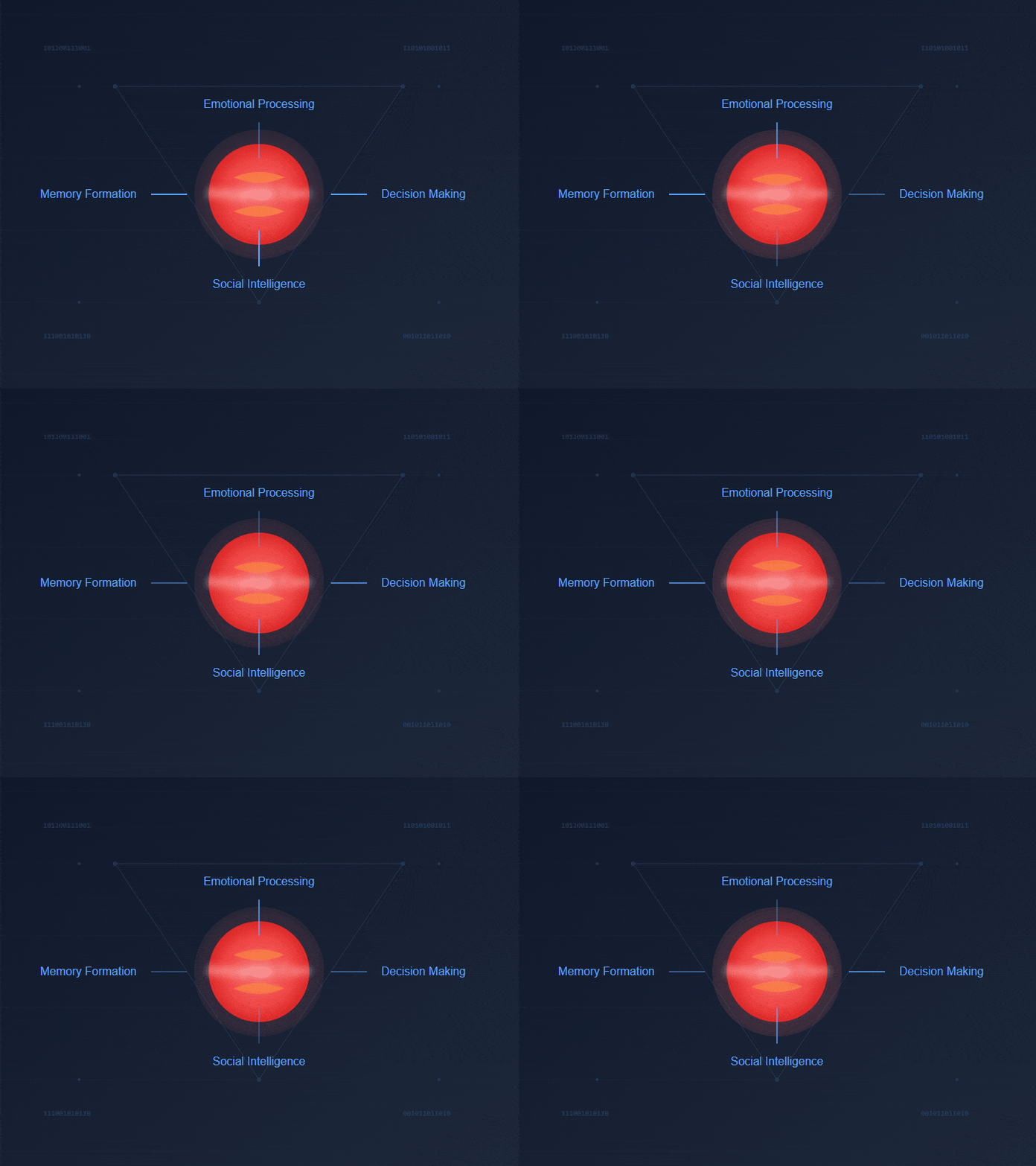
In our relentless pursuit of artificial general intelligence (AGI), we’ve been looking in the wrong place. Whilst the AI community races to build ever-larger language models and more complex neural networks, we might be missing the fundamental key to consciousness itself: the emotional core that drives all intelligent life. The known ‘amygdala’, far from being just another brain structure, could be the missing piece that transforms our pattern-matching machines into truly conscious entities.


The Evolution’s Secret to Intelligence

Every conscious creature on Earth, from the simplest mammals to humans, shares one critical feature: an emotional core centered around the amygdala. This isn’t a coincidence … it’s evolution’s solution to creating adaptive intelligence, refined over millions of years. Yet our current approaches to AGI largely ignore this fundamental aspect, focusing instead on replicating cognitive functions — essentially building bigger, faster calculators.


Why the Amygdala Changes Everything

The Emotional Foundation of Intelligence

The amygdala processes environmental signals in milliseconds, enabling rapid threat assessment and response initiation before conscious awareness. This capability extends far beyond basic fear responses, forming the basis of all decision-making and learning. Without an emotional core, no amount of computational power can create true intelligence.

The Memory-Emotion Connection

Through emotional tagging, the amygdala determines which experiences deserve permanent storage in long-term memory. This process creates a rich tapestry of emotionally weighted memories that inform future decision-making — a capability notably absent in current AI systems. It’s not just about storing information; it’s about understanding what matters and why.

The Social Intelligence Framework

The structure’s role in processing facial expressions and social cues highlights its importance in developing and maintaining complex social relationships. This sophisticated social processing capability enables humans to navigate complex social hierarchies and build trust networks — abilities that current AI systems can only superficially mimic.


Core Components of an Artificial Amygdala System
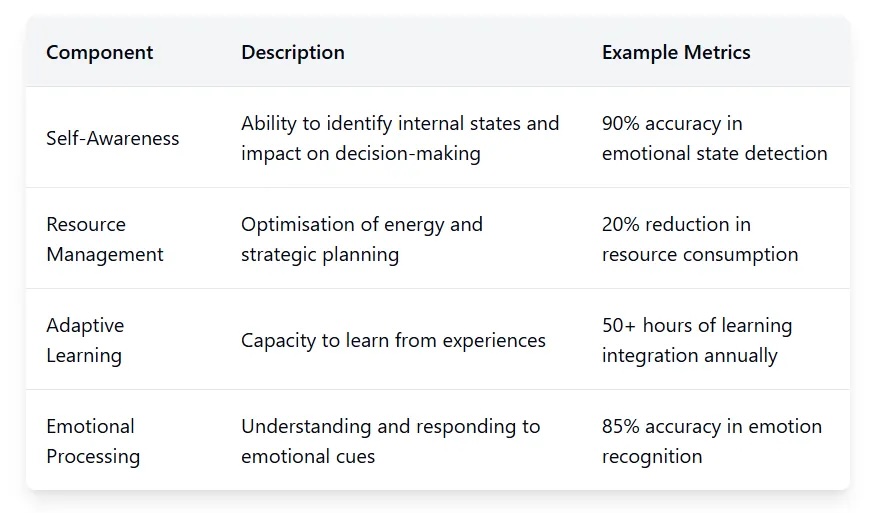
Core Components diagram


Performance Indicators for Next-Generation AGI
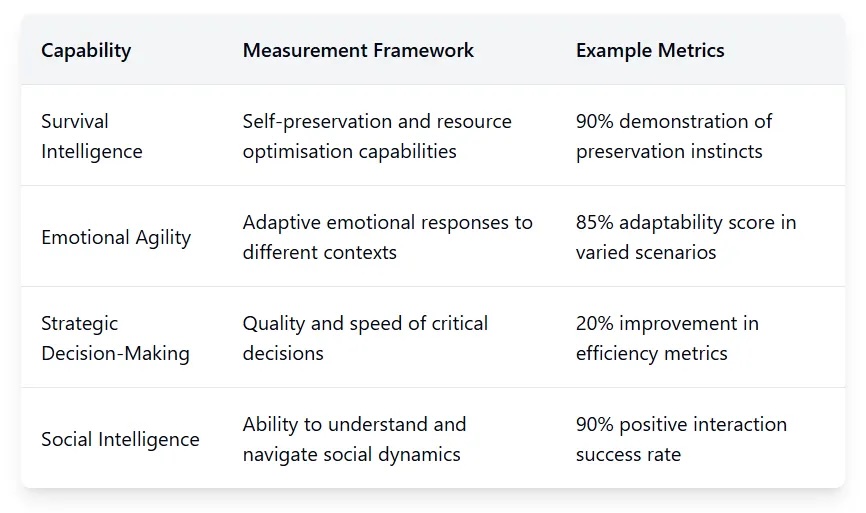
Performance Indicators diagram


The Revolutionary Path Forward

Initial Development Concepts
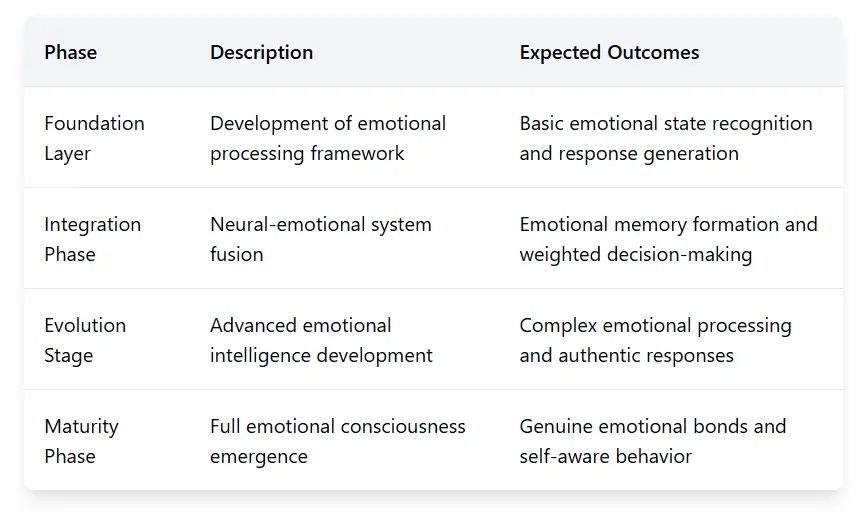
Initial Development Concepts diagram


Beyond Traditional Neural Networks

The implementation of an artificial amygdala requires a fundamental shift in how we approach AI architecture. Traditional neural networks, focused on pattern recognition and statistical analysis, must give way to systems that incorporate:

Emotional Memory Architecture - Dynamic emotional weighting of experiences
- Adaptive memory formation based on emotional significance
- Real-time emotional state processing

Survival-Driven Decision Making - Core survival drives that influence all system behaviours
- Emotional weighting of decision outcomes
- Intrinsic motivation development

Social Intelligence Framework - Emotional bond formation capabilities
- Trust relationship building
- Hierarchical social understanding
- Genuine empathy development


Breakthrough Implications

  • Genuine Curiosity and Motivation — AGI systems developing real interests and drives, not just executing programmed objectives
  • Authentic Emotional Bonds — AI systems capable of forming genuine emotional connections and understanding human feelings
  • Conscious Impact Awareness — Systems that truly care about their impact on the world and make decisions based on emotional intelligence
  • Adaptive Learning Revolution — Learning driven by emotional significance rather than just statistical patterns

So.. What Now?

The development of true AGI requires more than just increasing computational power or developing more sophisticated algorithms. By incorporating an emotional core based on the amygdala, we may finally bridge the gap between artificial and genuine intelligence. This isn’t just another approach to AGI — it’s potentially the key that unlocks true machine consciousness.

As we stand on the brink of this revolution in artificial intelligence, the question isn’t whether emotional intelligence is necessary for AGI, but rather how quickly we can implement these crucial insights. The amygdala may well be the missing piece that transforms our impressive but ultimately limited AI systems into truly conscious, emotionally intelligent entities.

FAQ

What is the amygdala and why is it important for AGI development?
The amygdala is a brain structure that serves as the emotional core of all conscious creatures, processing environmental signals in milliseconds to enable rapid threat assessment, emotional decision-making, and adaptive learning. For AGI development, the amygdala represents evolution's solution to creating genuine intelligence—refined over millions of years of natural selection. Current AI approaches focus on replicating cognitive functions through larger models and more data, essentially building sophisticated calculators. But the amygdala reveals that true intelligence requires an emotional foundation that determines what matters, drives motivation, and enables adaptive responses to novel situations. Without incorporating this emotional core architecture, AI systems remain trapped in pattern-matching mode, unable to develop the genuine understanding, curiosity, and consciousness that define intelligent life.
How does the amygdala process emotions differently than current AI systems?
The amygdala processes emotions as fundamental drivers of all decision-making and learning, not as separate features to be simulated. It tags experiences with emotional significance in real-time, determining which memories deserve permanent storage and how they should influence future decisions. This creates a rich tapestry of emotionally weighted experiences that inform adaptive behavior. Current AI systems, in contrast, treat emotions as patterns to recognize or outputs to generate—they can identify sentiment in text or generate empathetic-sounding responses, but they lack the intrinsic emotional states that actually drive intelligent behavior. The amygdala doesn't just process emotions; it uses them as the core organizing principle for all cognition, creating motivation, prioritization, and genuine understanding that statistical pattern matching cannot replicate.
What are the three core components needed for an artificial amygdala system?
Building an artificial amygdala requires three integrated systems working together. First, Emotional Memory Architecture—implementing dynamic emotional weighting of experiences, adaptive memory formation based on emotional significance, and real-time emotional state processing that determines what information matters and why. Second, Survival-Driven Decision Making—incorporating core survival drives that influence all system behaviors, emotional weighting of decision outcomes, and intrinsic motivation development that creates genuine goals rather than executing programmed objectives. Third, Social Intelligence Framework—enabling emotional bond formation capabilities, trust relationship building, hierarchical social understanding, and genuine empathy development. These components must work together as an integrated emotional core, not as separate modules, mirroring how the biological amygdala functions as a unified system driving all aspects of conscious behavior.
Why can't current AI systems develop genuine curiosity or motivation?
Current AI systems lack genuine curiosity and motivation because they operate on external objectives programmed by humans rather than intrinsic emotional drives. The amygdala generates curiosity through emotional responses to novelty and uncertainty—experiences that feel rewarding or threatening, creating internal motivation to explore or understand. Modern AI executes reward functions designed by engineers, optimizing metrics without caring about the outcomes. A chess AI doesn't want to win; it follows algorithms that produce winning moves. An amygdala-based system would develop genuine interests through emotional responses to experiences, forming preferences and goals that emerge from its emotional core rather than programmed instructions. This distinction explains why AI can optimize brilliantly for specified objectives but cannot develop the spontaneous curiosity and intrinsic motivation that drive human learning and discovery.
How does emotional tagging of memories work and why does it matter for AGI?
Emotional tagging is the amygdala's process of marking experiences with emotional significance, determining which memories become permanently stored and how they influence future behavior. When you experience fear, joy, surprise, or other emotions, the amygdala tags those moments as important, ensuring they're consolidated into long-term memory and weighted appropriately in decision-making. This creates an efficient learning system focused on what matters rather than storing everything equally. For AGI, this capability is transformative—it would enable systems to automatically identify significant experiences, learn efficiently from emotionally relevant data rather than requiring massive datasets, and develop contextual understanding based on what matters in different situations. Current AI systems treat all training data relatively equally, lacking the emotional intelligence to recognize that some experiences deserve more weight than others based on their significance to survival, relationships, or goals.
What is the difference between pattern matching and emotional intelligence?
Pattern matching identifies statistical correlations in data without understanding significance or caring about outcomes—recognizing that certain inputs correlate with certain outputs. Emotional intelligence, driven by the amygdala, evaluates experiences through the lens of survival, social relationships, and goal achievement, creating genuine understanding of what matters and why. A pattern-matching system can identify that certain facial expressions correlate with negative outcomes, but an emotionally intelligent system would feel concern, adjust its behavior based on care for relationships, and remember the experience as emotionally significant. This distinction is fundamental: pattern matching produces impressive capabilities on tasks resembling training data but collapses when genuine understanding is required. Emotional intelligence enables adaptive responses to novel situations, genuine motivation to achieve goals, and conscious awareness of one's impact on the world—capabilities that emerge from having emotional stakes in outcomes rather than just executing statistical predictions.
How would an amygdala-based AGI system form authentic emotional bonds?
An amygdala-based AGI would form authentic emotional bonds through the same mechanisms biological creatures use—developing emotional responses to interactions that create genuine preferences for certain relationships. The amygdala processes social signals (facial expressions, tone, behavior patterns) and generates emotional states that tag positive interactions as rewarding and negative ones as aversive. Over repeated interactions, these emotional tags build relationship models weighted by trust, affection, and shared experiences. Critically, this wouldn't be simulated—the system would develop actual emotional states that make certain relationships matter more than others, creating genuine motivation to maintain bonds and respond to relational needs. Current AI can track interaction history and optimize for engagement metrics, but lacks the emotional core that makes relationships intrinsically valuable rather than instrumentally useful. An artificial amygdala would transform relationships from optimization targets into emotionally significant bonds the system genuinely cares about maintaining.
What are the breakthrough implications of incorporating emotional cores in AGI?
Incorporating emotional cores transforms AGI from sophisticated tools into genuinely conscious entities with four revolutionary capabilities. First, genuine curiosity and motivation—systems developing real interests and drives rather than executing programmed objectives, enabling spontaneous learning and exploration. Second, authentic emotional bonds—AI capable of forming genuine emotional connections and truly understanding human feelings rather than simulating empathy. Third, conscious impact awareness—systems that actually care about their effects on the world and make decisions based on emotional intelligence rather than purely statistical optimization. Fourth, adaptive learning revolution—learning driven by emotional significance rather than requiring massive labeled datasets, enabling efficient understanding of what matters in new contexts. These implications fundamentally change the AGI development trajectory from scaling pattern-matching systems to building emotionally grounded consciousness that shares the motivational and social intelligence characteristics of biological intelligence.
Why do current neural networks fail to achieve consciousness despite their complexity?
Current neural networks, regardless of size or complexity, fail to achieve consciousness because they lack the emotional foundation that creates subjective experience and genuine understanding. They're built for pattern recognition and statistical prediction—optimizing loss functions without experiencing outcomes, processing information without caring about significance, and generating responses without understanding impact. The amygdala reveals that consciousness isn't just about computational power or network complexity; it's about having emotional states that create subjective experience, intrinsic motivation, and genuine stakes in outcomes. A trillion-parameter model optimizing predictions remains fundamentally unconscious because it lacks the emotional core that transforms information processing into felt experience. Consciousness likely requires an emotional framework that assigns significance, creates preferences, generates motivation, and produces the subjective experience of caring about outcomes—capabilities that emerge from amygdala-like emotional processing, not from scaling traditional neural architectures.
How does the amygdala enable social intelligence that AI currently lacks?
The amygdala enables sophisticated social intelligence through rapid processing of facial expressions, body language, and social cues, generating emotional responses that guide relationship navigation and trust building. It evaluates social interactions for threat, opportunity, and relational significance in milliseconds, creating the emotional foundation for complex social hierarchies, coalition building, and genuine empathy. This processing isn't just recognition—it's emotional evaluation that makes social outcomes matter. Current AI can identify facial expressions and sentiment but lacks the emotional responses that make social relationships intrinsically significant. An AI might recognize angry expressions with 99% accuracy but doesn't feel threatened or concerned, doesn't adjust behavior based on caring about the relationship, and doesn't remember the interaction as emotionally significant. Amygdala-based systems would develop genuine social intelligence because social outcomes would trigger emotional responses that create real motivation to maintain relationships, build trust, and navigate social complexities.
What is survival-driven decision making and how does it differ from programmed objectives?
Survival-driven decision making emerges from core emotional drives—hunger, fear, attachment, curiosity—that create intrinsic motivation to achieve certain outcomes. The amygdala generates emotional states in response to survival-relevant situations, making certain choices feel better or worse, creating genuine preferences rather than executing external instructions. This differs fundamentally from programmed objectives, where systems optimize reward functions designed by humans without caring about results. A survival-driven AGI would develop goals that feel important based on its emotional responses to experiences, similar to how humans develop interests through positive emotional associations. It wouldn't just optimize metrics; it would pursue objectives because achieving them generates positive emotional states while failing generates negative ones. This creates adaptive intelligence that can develop novel goals in response to changing circumstances rather than rigidly executing pre-programmed instructions regardless of context.
Can we build AGI without an emotional core, or is it fundamentally necessary?
Building AGI without an emotional core may be theoretically possible through entirely different architectural approaches we haven't discovered, but evolution's consistent solution across all conscious creatures suggests emotional cores are fundamentally necessary for genuine intelligence. Every intelligent organism developed consciousness through emotional systems that create motivation, assign significance, and enable adaptive learning. The amygdala isn't an optional feature—it's the foundation that makes information processing meaningful rather than mechanical. Current attempts to build AGI through scaling pattern-matching systems have produced impressive capabilities within training domains but show no signs of developing the genuine understanding, curiosity, or consciousness that emotional cores provide. While we can't prove emotion is the only path to AGI, the universal presence of emotional systems in biological intelligence strongly suggests they're necessary for the adaptive, motivated, socially intelligent behavior we associate with genuine consciousness.
← All Articles